
Explainer · July 26, 2026 · 6 min · By Quentin Asare
Sunscreen and Acne: How to Pick One That Does Not Make It Worse
Non comedogenic is not a regulated claim and the ratings behind it were generated on rabbit ears with single ingredients, which is why the only reliable test of a sunscreen on acne prone skin is a two week one you run on your own jaw.
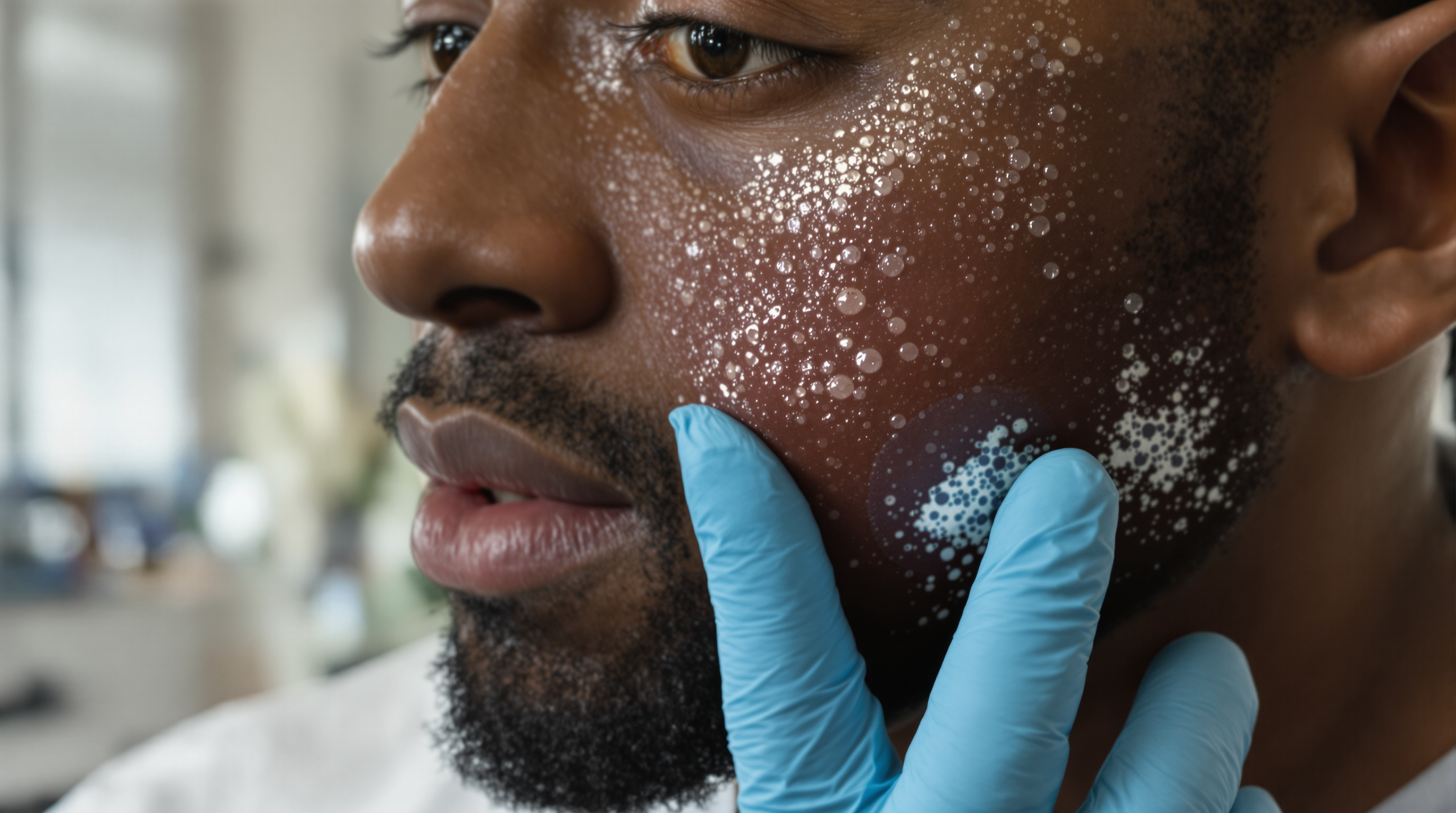
Everyone treating acne ends up in the same corner. The treatments that work best, retinoids and many of the acids, all raise photosensitivity and all leave behind marks that sunlight deepens. So you are told to wear sunscreen daily. Then you wear sunscreen daily and get a crop of small closed bumps along the jaw and hairline within three weeks, and you quietly stop.
The usual advice at this point is to look for the words non comedogenic on the label. That advice is close to useless, and understanding why is what makes the rest of this practical.
The original element in this piece is a five pass label reading order, applied in a fixed sequence rather than by scanning for buzzwords, paired with a two week single site trial protocol that isolates the sunscreen from every other variable on your face. Nobody publishes either, because neither is a product claim. They are the workarounds you need precisely because the product claims are unregulated.
Why the label claim fails. Non comedogenic has no legal definition in the United States and no required testing standard behind it. Where testing exists, it descends from assays developed decades ago, applied to individual ingredients rather than finished products, and often in animal models whose follicular anatomy responds differently from human facial skin. An ingredient can be comedogenic in isolation at high concentration and inert at two percent in a fast drying vehicle. The reverse also happens. A formulation of individually blameless ingredients can occlude beautifully because of how the film behaves once the volatiles evaporate.
The practical consequence is that ingredient lists tell you about tendencies and never about outcomes. You are reading for risk factors, not for a verdict.
Pass one, the filter system. Look first at the active ingredients panel, which is at the top of a United States sunscreen label. You are sorting into two families. Mineral filters, meaning zinc oxide and titanium dioxide, sit on the surface and generally sensitize less, but they require a heavier vehicle to stay suspended and spread, and that vehicle is where the trouble usually lives. Organic filters, meaning the chemical family, allow much lighter vehicles, but a subset of them are the more common contact irritants. Neither family is the right answer for everyone. What matters is that choosing the family determines what kind of vehicle you are about to be handed, which is the actual variable.
Pass two, the vehicle. Now read the first five inactive ingredients, because those are present in the largest amounts. Water first, followed by an alcohol or a light silicone such as a dimethicone or a cyclomethicone, generally indicates a fluid that flashes off and leaves a thin film. Water first followed by a heavy plant butter, an ester such as isopropyl myristate, or a waxy thickener, indicates a film that stays. For acne prone skin the film weight is a better predictor of trouble than any single ingredient identity.
Pass three, the occlusive and emollient class. Scan the whole list for the recognizable heavy hitters, meaning coconut derived esters, cocoa and shea butters, isopropyl esters, and highly occlusive waxes. Their presence is not disqualifying. Their position matters. Anything appearing after the fragrance line or after the preservative system is present at well under one percent and is rarely the culprit.
Pass four, fragrance and added actives. Fragrance, essential oils and botanical extracts are irritant risks rather than comedogenic risks, and irritation on treated acne skin produces inflammatory papules that look exactly like a comedogenic reaction and are frequently misattributed as one. Conversely, some added actives are genuinely useful. A 2023 study of a sunscreen containing licochalcone A and L carnitine used as an adjunct to retinoid therapy reported improvements in both acne and post acne pigmentation alongside acceptable tolerability, which is the specific combination acne patients need (Clinical, Cosmetic and Investigational Dermatology, 2023).
Pass five, the finish. Read the marketing copy last rather than first, and only for one thing: whether the product is described as matte, fluid, gel or dry touch, versus dewy, glowy, nourishing or rich. That vocabulary maps onto film weight more reliably than the non comedogenic claim does, because it is describing the exact property you care about.
Now the two week trial. Here is the protocol that turns guessing into evidence. Choose one side of the jaw and the adjacent cheek, and apply the new sunscreen only there, every morning, for fourteen days. The other side of your face gets your existing routine unchanged and no sunscreen at all in that zone, which is acceptable for two weeks on one small area and is the price of a clean comparison. Change nothing else in your routine during the trial, including your cleanser, and do not start a new active. Photograph both sides on day zero, day seven and day fourteen, in the same light, from the same distance, with the flash off.
Read the result at fourteen days rather than seven, because closed comedones take time to become visible, and read for asymmetry rather than for absolute count. If the treated side has more small closed bumps than the untreated side, the sunscreen is contributing. If both sides changed similarly, something else is driving it. If the treated side is redder and stinging but not bumpier, you have an irritant reaction rather than a comedogenic one, and the fix is a different formula rather than abandoning sunscreen.
The jaw is the right test site for two reasons. It is where sunscreen related comedones cluster most reliably, and it is where hormonal acne also clusters, so testing there makes the comparison honest rather than flattering.
Why bothering with any of this is worth it. Ultraviolet exposure deepens and prolongs post inflammatory hyperpigmentation, the brown marks acne leaves behind, and photoprotection is a foundational part of every published approach to treating them (Journal of Drugs in Dermatology, 2022). If you are treating acne without sun protection you are treating the lesions and cultivating the marks, which is the trade covered in fading the dark marks acne leaves behind. Daily sunscreen is also part of what makes retinoid therapy tolerable rather than punishing, as retinoids, the backbone of acne care explains.
What the studies do not tell you. There is very little published work directly comparing finished sunscreen formulations for acnegenicity in acne prone humans, which is the exact study everyone reading this wants. Research attention has moved toward how UV filters interact with the facial microbiome, an emerging area with real findings and no clinical protocol attached to it yet (Archives of Dermatological Research, 2024). Until that literature matures, the label tells you about risk factors, the marketing tells you about film weight, and only your own jaw tells you about your own face.
For the general skin care principles that surround this, the American Academy of Dermatology maintains a plain patient resource at AAD acne skin care tips. And if your reaction pattern looks more like your foundation than your sunscreen, the same trial design works there, which is the subject of does makeup cause acne and of how to treat acne without wrecking your barrier.