
Explainer · August 6, 2026 · 9 min · By Quentin Asare
Acne scar laser treatment: which device suits which scar, and what has to be true first
A laser does not treat acne scars. It treats one geometry of acne scar, and the rest of your face comes along for the downtime. Here is a side-lit census you can run tonight to find out which geometry you actually have, plus the isotretinoin timing rule most clinics still quote that a 2017 consensus panel quietly overturned.
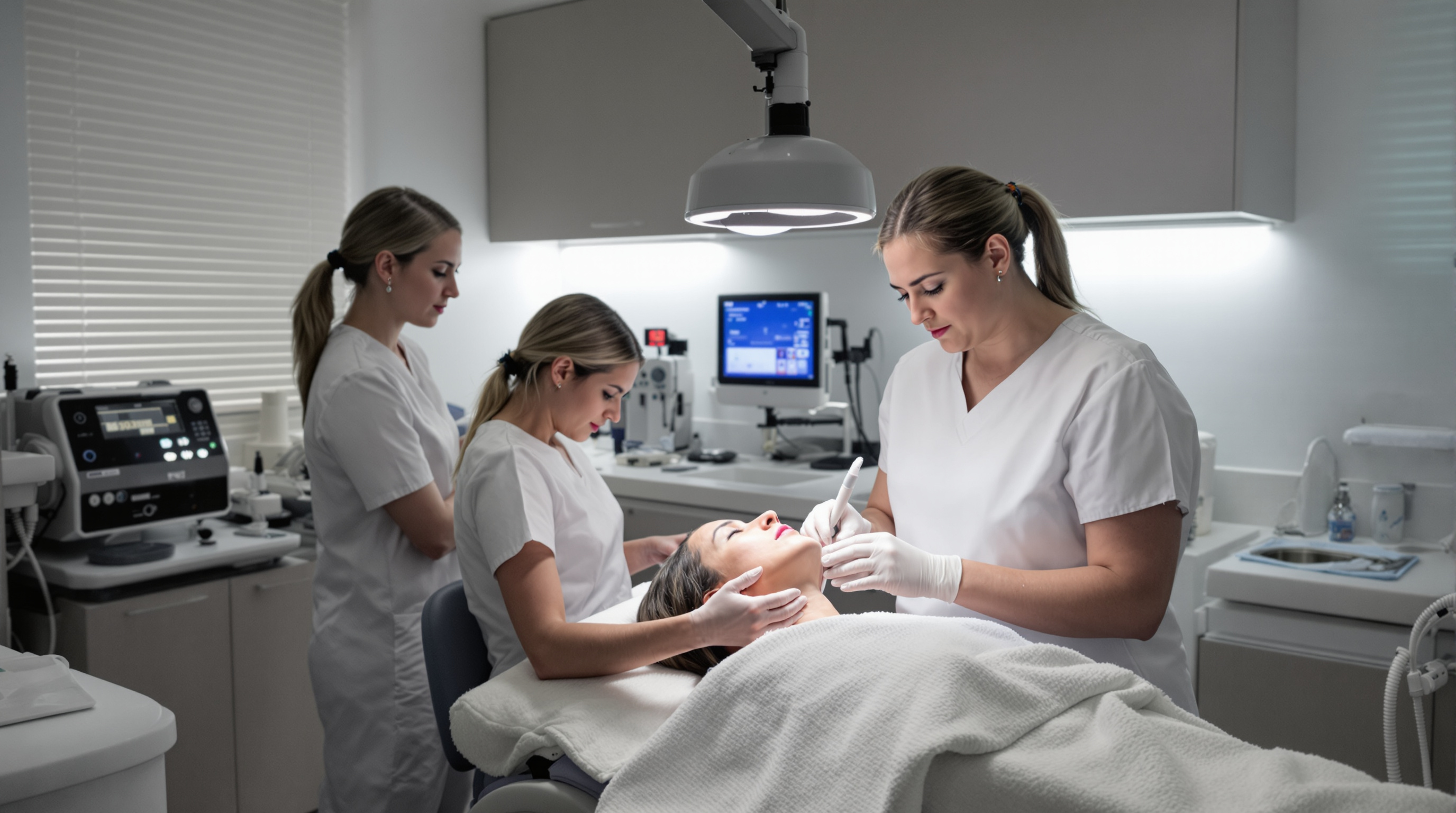
Acne scar laser treatment gets sold as one decision. Pick a device, buy a package of three, book the first session. It is really two decisions stacked on each other, and the first one has nothing to do with lasers. Before anything else, run the side-lit scar census below. It is a four-step count you can do tonight with one lamp and your phone, and it tells you whether a laser is the right first tool for the texture you have or the third tool in a sequence. Clinics run the equivalent exam under their own lighting and almost never hand the method to the patient, which is why so many people pay for resurfacing that was never going to move the scars bothering them most.
What a fractional laser physically does. A fractional device drills or heats microscopic columns of injury into the skin and deliberately leaves untreated bridges of normal tissue between them. Those bridges are what let the surface heal quickly. The healing response inside each column lays down new collagen, and that new collagen lifts the floor of a depressed scar toward the level of the skin around it. Read that mechanism carefully, because it contains the whole limitation. It only works on a scar whose floor is free to rise. A rolling scar anchored to deeper tissue by fibrous bands is being pulled down from underneath. You can stimulate all the collagen you like above it and the tether will hold it exactly where it is.
The side-lit scar census. Turn off every overhead light and set one lamp to the side of your face at roughly forty five degrees, about an arm's length away. Overhead and ring lighting flatten texture, which is precisely why clinic before-and-after photos so often use it. Face the camera straight on and take one photo. Turn and repeat with the lamp on the other side, because scars cast shadow in one direction only. Now the step that does the real work: with two fingers, stretch the skin taut across the area and take the same photo again under the same lamp. Then read the three results. Scars that flatten out and effectively vanish when the skin is stretched are tethered rolling scars. Scars that hold a crisp shadow edge under full stretch are boxcar scars, with walls too steep for tension to erase. Small dark pinpoints that look like enlarged pores and change very little either way are ice pick scars. Count each group and write the three numbers down.
Those three numbers are your treatment plan in draft form. If most of your count vanishes under stretch, subcision to release the bands comes before resurfacing, and a laser booked first will underdeliver no matter which one it is. If boxcar scars dominate, fractional resurfacing is genuinely the workhorse and the counts should improve. If ice pick scars dominate, a resurfacing pass mostly treats the healthy skin surrounding a narrow deep tract, and focal chemical reconstruction such as TCA CROSS does more per session than any laser will. Most faces are a mix, which is the actual reason single-device plans disappoint.
The devices, described plainly. Ablative fractional lasers, meaning carbon dioxide and erbium, remove tissue in each column and drive the deepest remodeling, at the cost of roughly a week of oozing, crusting, and weeks of residual redness. Nonablative fractional lasers in the 1540 to 1550 nanometer range heat the dermis while leaving the outer layer intact, which buys a far easier recovery and costs you session count, since each pass changes less. Radiofrequency microneedling delivers heat below the surface through insulated needles and largely spares the epidermis, which is why it is often preferred when pigment risk is the dominant concern. Picosecond lasers fitted with a diffractive lens are gentler still and produce real but modest textural change. No device in that list clears a face on its own, and the published evidence for all of them is weaker than the marketing implies (Cochrane systematic review of interventions for acne scars).
The timing rule most clinics still quote. Ask about lasering while on or just off isotretinoin and you will very likely be told to wait six months. That number traces back to a handful of small case reports from the 1980s describing unexpected hypertrophic scarring after dermabrasion and argon laser. In 2017 a panel reviewed the accumulated evidence systematically and concluded there was insufficient evidence to delay manual dermabrasion, superficial chemical peels, or laser hair removal, and insufficient evidence to delay ablative and nonablative fractional resurfacing, in patients currently or recently taking the drug (JAMA Dermatology consensus recommendations). Where the panel did still counsel caution was full field ablative resurfacing and mechanical dermabrasion. So the honest version of the rule is device specific, not drug specific, and a clinic quoting a flat six months for every procedure is quoting 1985. If you are weighing the drug itself, when to consider isotretinoin covers that decision separately.
Active acne comes first, and scars have to be mature. Resurfacing inflamed skin invites new lesions and, worse, new scars in the same session you paid to fix the old ones. There is also a measurement problem: a census taken during a flare counts lesions that were going to resolve on their own, which inflates your numbers and sets you up to credit the laser for healing that would have happened anyway. Standard practice is to control the acne first and treat scars that are at least six to twelve months old and no longer changing on their own.
Skin tone changes the whole calculation. Post inflammatory hyperpigmentation after energy-based treatment is the main risk in richly pigmented skin, and it is common enough that it drives device choice rather than merely qualifying it. The practical adjustments are a test spot in a discreet area, lower densities with more sessions, longer intervals between them, and a pigment control routine running before and after (review of energy-based devices in skin of color). A clinician who does not raise any of this unprompted is not the one to run your first pass.
What the studies do not tell you. The Cochrane review of acne scar interventions found the evidence base to be low quality overall: small trials, short follow up, split face designs, and outcome scales that differ from paper to paper. More specifically, almost no trial compares device classes head to head against the same baseline scar census, which is the exact comparison a patient standing in a consultation room needs. And Fitzpatrick types four through six remain thinly represented in the resurfacing literature, so much of the skin-of-color guidance above is careful extrapolation rather than trial results. Nobody publishes that caveat next to a package price.
Take the three numbers with you. At the consultation, hand over your counts and ask four things. How many of each type do you count on my face. Which of those do you expect this laser to change. Which ones need a different tool first, and in what order. And how many sessions before I should expect a visible change in my count, not in the photographs. If the answers do not reference your scar types individually, you are being sold a package rather than a plan. For the underlying question of which scars are fixable at all, read acne scarring: what can and cannot be fixed, the American Academy of Dermatology keeps a plain patient overview at AAD on acne scars, and the rest of our acne treatment coverage sits behind the same principle: the exam decides the tool, never the other way around.