Myth Check · August 3, 2026 · 5 min · By Quentin Asare
The Benzoyl Peroxide Percentage Myth: Why 2.5% Often Beats 10%
Higher concentrations of benzoyl peroxide do not clear acne faster, but they do irritate skin more. Here is what the pharmacology actually says, and how to pick a strength that works.
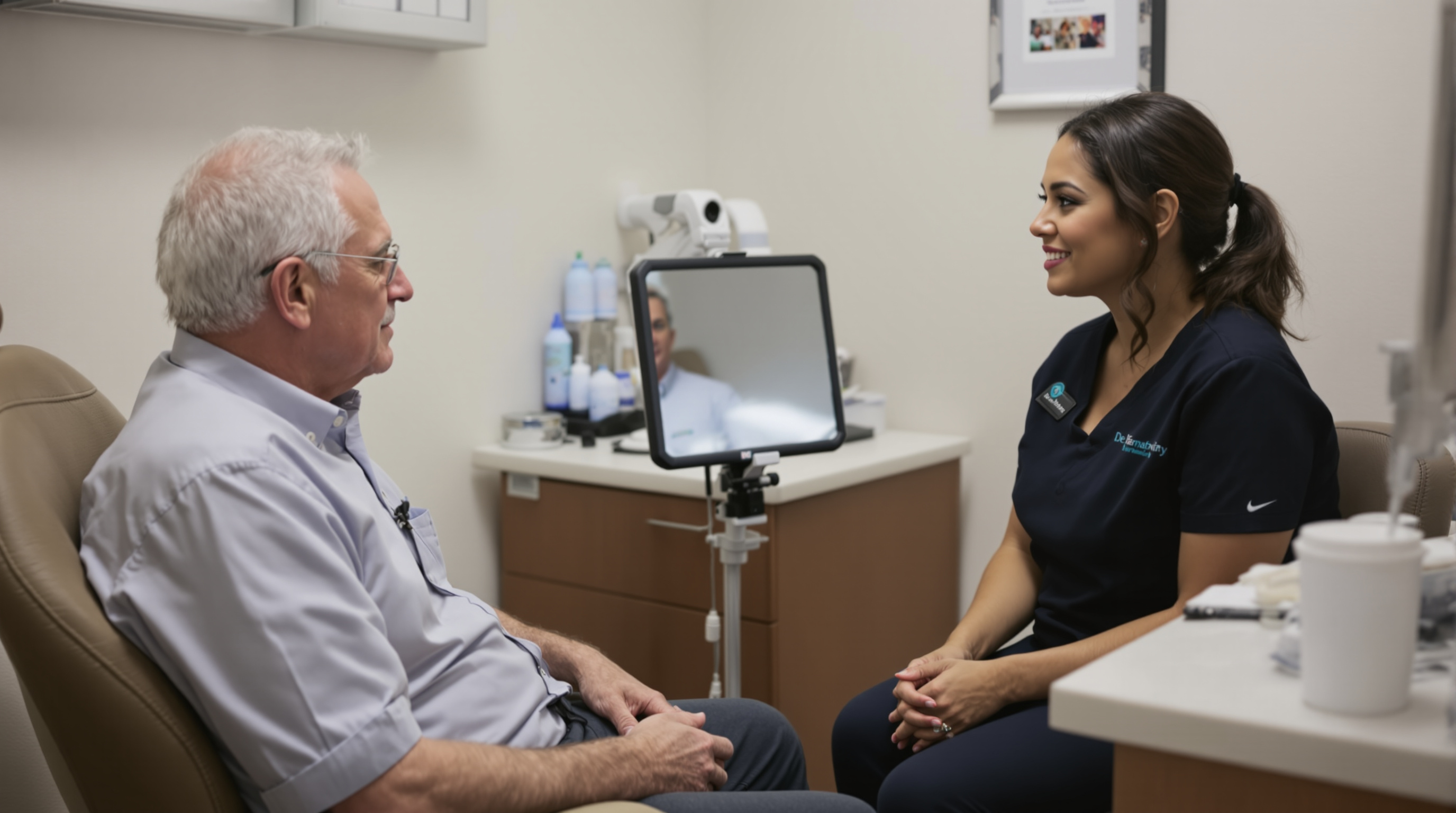
Walk down any pharmacy aisle and you will see benzoyl peroxide products competing on a single number: the percentage. A 10% wash sits next to a 5% gel, which sits next to a 2.5% lotion, and the implicit message is clear. Bigger number, stronger medicine, faster results. It is one of the most persistent assumptions in over-the-counter acne care, and it is largely wrong.
What benzoyl peroxide actually does
Benzoyl peroxide works through two main mechanisms. First, it is an oxidizing agent. Once it penetrates the follicle, it breaks down and releases free oxygen radicals that kill *Cutibacterium acnes*, the bacterium implicated in inflammatory acne. Because this is a chemical attack rather than a targeted antibiotic mechanism, bacteria cannot develop resistance to it, which is why dermatologists still rely on it decades after its introduction and often pair it with topical antibiotics specifically to prevent resistance.
Second, it has a mild keratolytic effect, meaning it helps loosen the dead skin cells that clog pores. This matters because acne begins with a blocked follicle, not with bacteria alone.
The dose-response ceiling
Here is the part the packaging does not tell you. Comparative studies going back to the 1980s, including well-cited work published in the British Journal of Dermatology, found that 2.5%, 5%, and 10% formulations reduced inflammatory lesions at statistically similar rates. The antibacterial effect appears to saturate at low concentrations. Once enough benzoyl peroxide reaches the follicle to suppress *C. acnes*, adding more does not kill bacteria that are already dead.
What does scale with concentration is irritation. The same oxidative chemistry that destroys bacteria also stresses skin cells, degrades lipids in the skin barrier, and triggers dryness, redness, peeling, and stinging. In trials, 10% formulations consistently produced more irritation than 2.5% with no meaningful gain in clearance. That trade is a bad deal for most users.
Why irritation is not a neutral side effect
It is tempting to treat peeling and redness as proof the product is working. In practice, a compromised skin barrier can make acne worse. Irritated skin produces inflammatory signals of its own, and a damaged barrier loses water faster, which can prompt some people to compensate with heavier moisturizers or, worse, to abandon treatment entirely. Adherence is the quiet variable in every acne outcome. A tolerable 2.5% product used daily for twelve weeks will outperform a harsh 10% product abandoned after two.
Irritation also matters for anyone combining benzoyl peroxide with a retinoid such as adapalene, a pairing that is now standard in acne guidelines. Both ingredients irritate, and their effects stack. Starting with the lowest effective benzoyl peroxide concentration leaves room in the tolerability budget for the retinoid, which is doing separate and important work on comedone formation.
When a higher percentage makes sense
There are legitimate uses for stronger formulations. Wash-off products, such as cleansers and short-contact foams used on the chest and back, spend only a minute or two on the skin before rinsing. Less active ingredient is absorbed, so a 5% to 10% wash on truncal skin can be reasonable, particularly since body skin is generally thicker and more tolerant than facial skin. Some clinicians also step patients up if a lower strength has been used consistently for eight to twelve weeks without adequate response, though at that point the better move is often adding a different mechanism, not more of the same one.
Practical guidance
For facial acne, a 2.5% leave-on gel or lotion is a sound starting point for most people. Apply a thin layer to the whole acne-prone area, not just visible spots, because benzoyl peroxide works partly by preventing new lesions in follicles that are clogged but not yet inflamed. Expect six to eight weeks before judging results, since the lesion cycle itself takes weeks to turn over.
A few housekeeping notes. Benzoyl peroxide bleaches fabric, so use white pillowcases and towels or apply it well before contact. It can inactivate tretinoin if layered at the same time, so if you use both, apply them at different times of day or choose a formulation designed for co-use. And moisturize: a plain, non-comedogenic moisturizer applied after the treatment dries reduces irritation without blunting efficacy.
The bottom line
The percentage on the box measures concentration, not effectiveness. For leave-on facial products, 2.5% delivers essentially the same antibacterial punch as 10% with a fraction of the irritation, and the gentler option is the one people actually keep using. In acne treatment, consistency beats intensity almost every time.
Related reading: Benzoyl Peroxide Strength: Why 2.5 Percent Often Works as Well as 10 Percent.
Further reading: Clindamycin Phosphate 1.2%/Adapalene 0.15%/ Benzoyl Peroxide 3.1% Gel for Moderate-to-Severe Acne: A Pooled Analysis by Age (J Drugs Dermatol 2025); Early and Sustained Acne Lesion Reductions With Fixed-Dose Clindamycin Phosphate 1.2%/Adapalene 0.15%/Benzoyl Peroxide 3.1% Gel (J Drugs Dermatol 2024); Evaluation of the efficacy of maintenance therapy for acne vulgaris using adapalene 0.1%/benzoyl peroxide 2.5% gel and benzoyl peroxide 2.5% gel for 24 weeks and assessment of atrophic acne scars using three-dimensional image analysis (J Dermatol 2023).