Explainer · July 3, 2026 · 6 min · By Quentin Asare
Salicylic acid: what it actually does inside a pore
The drugstore aisle's favorite acid is the only common one that dissolves into oil, which changes where it works and who it helps. How it compares to benzoyl peroxide and retinoids, and where it earns a place in a routine.
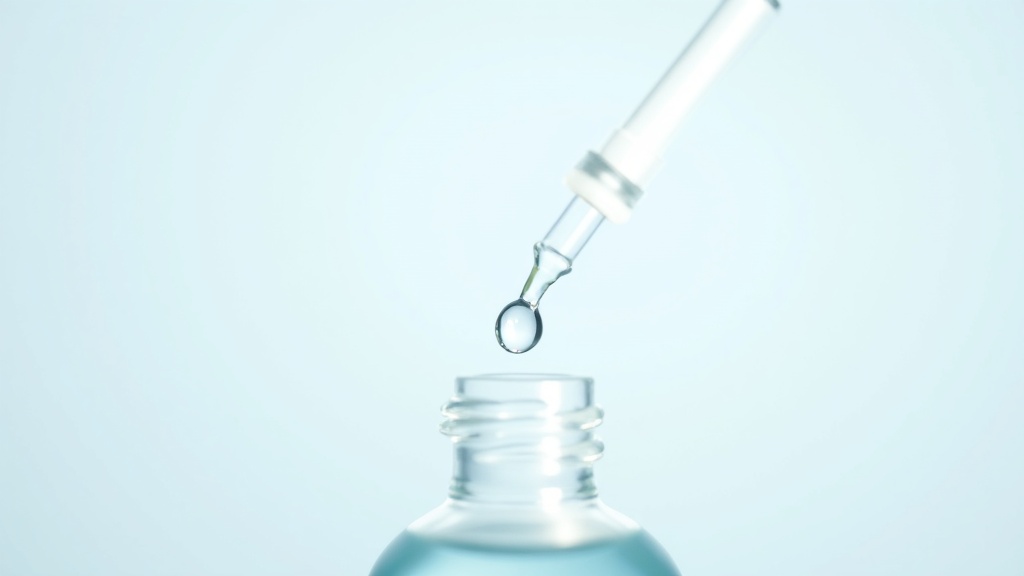
Walk any skincare aisle and salicylic acid is everywhere: cleansers, toners, spot gels, body washes, all promising clearer pores. It is one of the oldest actives in dermatology, originally derived from willow bark and related to aspirin, and it earns its ubiquity more honestly than most shelf staples. But it is also widely misunderstood, both overrated as a cure-all and underrated as the specialist tool it actually is.
The oil-solubility advantage. Most exfoliating acids, the alpha hydroxy family that includes glycolic and lactic acid, are water-soluble. They work at the skin surface, loosening the bonds between dead cells and improving tone and texture, but they do not penetrate oil. Salicylic acid is a beta hydroxy acid, and it is lipid-soluble, which means it can dissolve into sebum and travel down into the pore itself. Once inside, it loosens the compacted plug of dead cells and oil that starts every lesion, and it desolidifies the mix so the follicle can drain. It is, in effect, the only common over-the-counter acid that works where acne actually begins. It also has mild anti-inflammatory properties inherited from its aspirin lineage, which is why it can visibly calm a red spot slightly faster than it can clear a clog.
What it treats well, and what it cannot. Salicylic acid is at its best against comedonal acne: blackheads, whiteheads, congested texture, and the rough forehead bumps that never quite become pimples. It keeps pores running clear and shines in oily zones and on the body, where a salicylic wash covers ground a cream never will. What it does not do is kill bacteria or change the hormonal signals driving oil production. Against inflamed, papular acne it is a supporting act rather than a lead, and against deep cystic or hormonal breakouts it is largely a bystander; those jawline flares respond to internal treatment, as covered in hormonal acne in adult women. Anyone using a two percent gel against cystic acne and concluding that nothing works is testing the wrong tool.
How it compares to the heavyweights. The natural comparison is benzoyl peroxide, and they are complements rather than rivals: salicylic acid unclogs, benzoyl peroxide kills the bacteria that inflame the clog. Mild comedonal acne often needs only the acid; inflamed acne usually needs the peroxide or a prescription. Against retinoids the comparison is starker. Both normalize how the pore sheds, but retinoids do it by changing cell behavior at the receptor level, which is more powerful and more preventive. Salicylic acid clears the traffic jam; a retinoid retimes the lights. The acid wins on gentleness, price, and availability, and it suits people who cannot tolerate a retinoid or want a body-wide option.
Using it without overdoing it. Concentrations between 0.5 and 2 percent are the standard over-the-counter range, and 2 percent is plenty. The format matters as much as the strength. A leave-on product, a toner, serum, or gel, gives the acid hours to work and is meaningfully more effective than a cleanser that rinses off in thirty seconds, though a salicylic cleanser is a fine low-irritation entry point and a sensible choice for the body. Start once daily or every other day, watch for dryness, and resist the urge to stack it on top of a new retinoid plus a scrub plus a peel. Salicylic acid is gentle alone and harsh in a pile-up, and a stripped, stinging face clears more slowly, not faster. Contrary to its reputation as a drying agent, used sensibly it is one of the better-tolerated actives, and it is one of the few that multitasks against clogged pores, oiliness, and mild texture at once.
The bottom line. Salicylic acid deserves its shelf space, for the right job. It is the specialist for clogged pores and oily, congested skin, a strong supporting player in inflamed acne, and the wrong lead for cystic or hormonal disease. Know which acne you have, give it eight weeks of consistent use in a leave-on format, and let it do the one thing it does better than anything else at the drugstore: keep the pore open.
Related reading: Acne is not a hygiene problem.
Further reading: Evaluation of 30% supramolecular salicylic acid followed by 1565-nm non-ablative fractional laser on facial acne and subsequent enlarged pores (Lasers Med Sci 2023); A prospective, randomized, split-face study of concomitant administration of low-dose oral isotretinoin with 30% salicylic acid chemical peeling for the treatment of acne vulgaris in Asian population (Int J Dermatol 2022).